Buying the wrong work truck rarely announces itself right away. It shows up months later as a snapped hitch, a transmission that can’t handle repeated towing, or a bed frame rusting from unmanaged loads. By the time the signs are obvious, the truck has already cost more in downtime and repairs than it ever saved upfront. Getting this decision right the first time is what separates a truck that works for you from one you’re constantly working around, and that’s exactly where Mission Motors can help.
This guide breaks down what actually makes a farm or work truck different from a standard pickup, the models worth considering, and the inspection details most buyers overlook. By the end, you’ll know precisely what to look for before spending a single dollar on used trucks.
Why Stanwood, WA Buyers Need a Truck Built for Farm and Work
A commuter truck and a work truck may look similar parked side by side, but the engineering underneath tells a very different story.
Where Farm Trucks Actually Earn Their Keep in Stanwood
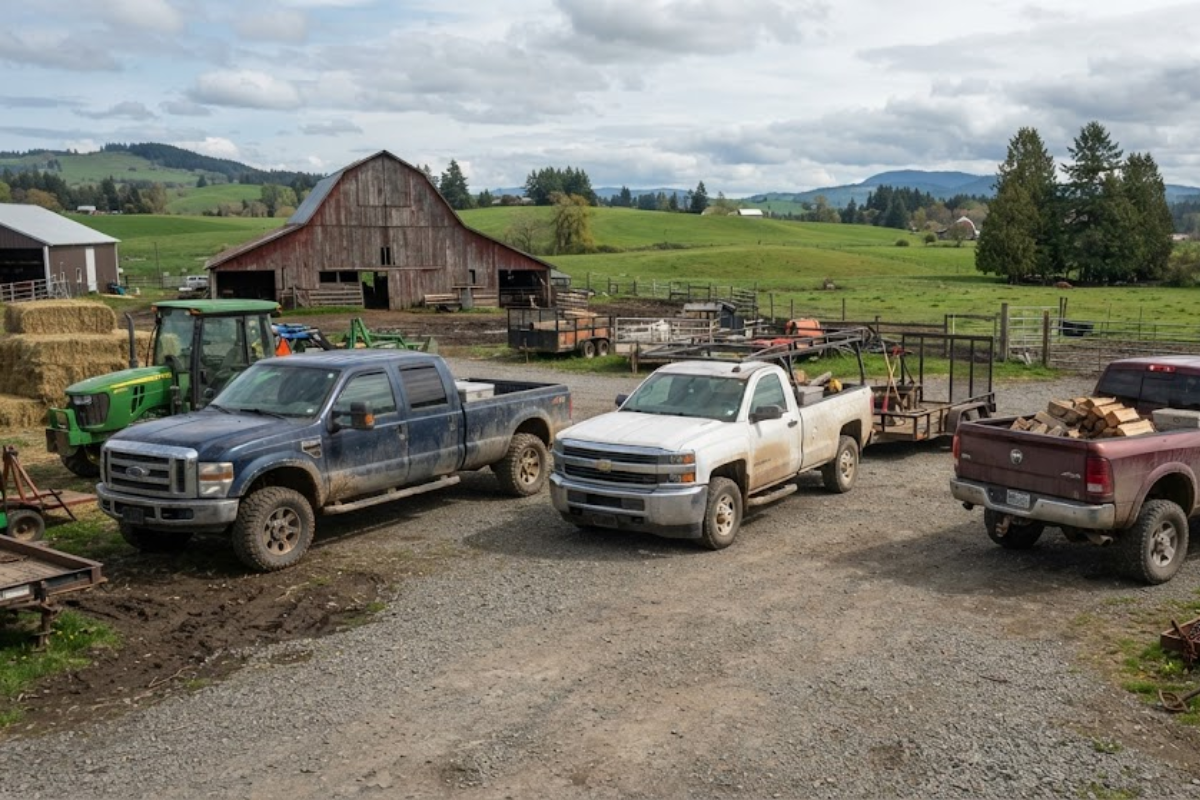
Local trucks handle feed runs, livestock towing, fencing hauls, and unpaved farm roads that punish standard suspensions daily. A truck without the right specifications for used work trucks Stanwood, WA buyers actually need often fails under exactly these repeated, everyday demands, not dramatic one-time events.
The Engineering Gap Between Farm Trucks and Regular Pickups
The real difference comes down to two numbers most buyers never check: GVWR (gross vehicle weight rating) and payload capacity. Work trucks carry reinforced frames and stiffer rear leaf springs specifically so they don’t sag or crack under sustained weight, something a standard pickup’s frame simply wasn’t engineered to absorb over years of heavy use.
A truck that can’t meet its rated payload isn’t saving you money. It’s quietly borrowing against your next repair bill.
Key Features to Look for in a Farm or Work Truck
Before comparing specific models, it helps to know which specs actually predict long-term performance and which ones are largely marketing language.
Why Towing Capacity Isn’t Just About Engine Size
The towing capacity that used trucks are rated for depends heavily on axle ratio, engine torque, and frame reinforcement, not engine size alone. A half-ton truck with a numerically higher axle ratio, say 3.73 instead of 3.31, can tow meaningfully more even with an identical engine under the hood.
| Truck Class | Typical Towing Range | Best Suited For |
| Mid-size pickup | 5,000–7,700 lbs | Light trailers, single livestock |
| Half-ton truck | 9,000–13,000 lbs | Multi-livestock trailers, equipment |
| Heavy-duty (2500/250 series) | 14,000–20,000 lbs | Large implements, gooseneck loads |
| Heavy-duty dually (3500/350 series) | Up to 36,000+ lbs | Commercial-grade hauling |
Bed Height Matters as Much as Bed Length
A truck bed size comparison often focuses on length alone, but bed height matters just as much for farm work. Taller sidewalls hold loose feed, gravel, and fencing supplies that shorter beds spill on rough terrain, while longer beds sacrifice maneuverability around tight barn access points.
What Real Off-Road Capability Looks Like
For genuinely rough terrain, 4WD used trucks Pacific Northwest buyers rely on need a two-speed transfer case with a true low-range gear, not just four driven wheels. Low-range gearing is what lets a truck climb steep, muddy grades without straining the drivetrain or overheating the transmission.
Top Used Trucks for Farm Work in Stanwood, WA
Every farm has different demands, so the right truck depends far more on the job at hand than the badge on the grille.
When You Need Serious Hauling Muscle
The Ford F-250/F-350, Chevrolet Silverado 2500HD, and RAM 2500 consistently lead the list of heavy-duty used trucks Washington State buyers turn to for gooseneck trailers and dense equipment loads. Their reinforced frames and higher-torque engines are built specifically for sustained, repeated heavy use.
Everyday Trucks That Still Pull Their Weight
Mid-size work trucks Stanwood owners favor include the Toyota Tacoma, Chevrolet Colorado, and Ford Ranger. They’re easier to maneuver around barns and tight gates while still managing feed runs, fencing materials, and smaller trailers without excess bulk.
Getting More Miles Per Gallon Without Losing Capability
Newer turbocharged four-cylinder trucks now match towing figures that older V6 engines once required, while burning noticeably less fuel on routine, non-towing errands. For drivers who tow occasionally but drive daily, this shift makes a real difference over a full year of ownership.
Gas vs Diesel for Farm and Work Trucks
Fuel type isn’t really a matter of preference; it’s a matter of how often you’re towing near a truck’s rated maximum.
The Torque Difference That Actually Affects Towing
Diesel work trucks Stanwood, WA owners choose typically produce far more low-end torque, often 400 lb-ft higher than a comparable gas engine, which matters directly under sustained heavy load. Gas engines respond more quickly off the line but lose that advantage once towing weight climbs.
What Diesel Ownership Really Costs Over Time
Diesel systems carry more complexity, including DEF fluid, turbochargers, and emissions components, which generally means higher repair costs when something eventually needs attention. Gas engines remain simpler and cheaper to maintain, making them the more practical choice for occasional, lighter-duty towing.
What to Inspect Before Buying a Used Work Truck
A truck that passes a visual inspection can still be hiding structural fatigue that only reveals itself under real weight.
Signs of Overloading Hiding in the Bed and Frame
Inspect rear frame rails closely for hairline rust cracks, a common sign of chronic overloading beyond the truck’s rated payload. Bed liners can hide dents and corrosion, so it’s worth lifting them during any serious inspection.
What a Worn Hitch and Sagging Suspension Reveal
A worn used truck towing hitch or a rear end that sits noticeably lower than the front signals the truck was towed near, or beyond, its limit repeatedly. Suspension components under this kind of strain wear out faster than mileage alone would suggest.
Why Service Records Matter More Than the Odometer
Transmission fluid changes matter more for work trucks than mileage alone, since heat generated during towing degrades fluid far faster than regular commuter driving does. Following a thorough used truck inspection checklist before purchase is the single biggest factor separating a reliable truck from an expensive mistake.
Why Buy Your Farm or Work Truck From Mission Motors in Stanwood, WA
At Mission Motors, every vehicle we sell undergoes a complete inspection before it ever reaches our lot, so the wear points above are checked long before you see the truck yourself.
An Inventory Built Around Real Work
Our inventory of Mission Motors used trucks spans both mid-size and heavy-duty options, and we work backward from your budget to match a truck or car to your actual workload rather than simply your wish list.
A Dealership That Knows What Local Farms Need
As a family-owned dealership serving Stanwood, Arlington, and Camano Island, we back every purchase with flexible financing regardless of credit history, plus a full-service department staffed by certified mechanics for ongoing repairs.